
The Model Has to Be on the Instrument
The usual way modern instruments are built inverts the order of operations: the device acquires data, ships it somewhere, and a server does the science. The result of a measurement is not ready until a network responds.
For a chemical composition check at the point of need, that arrangement is backwards. The measurement is useful when the material is in front of you — in the receiving bay, at the station, in the field. Embedding the scientific core of the instrument — pre-processing, calibration, and prediction — in the device changes what a portable analyzer actually is: it stops being a data-gathering probe that waits on infrastructure and becomes a self-contained instrument, in the way a balance is self-contained.
What ‘Small’ Really Means
A chemometric chain — pre-processing steps, a calibration model, and its validation logic — is numerically modest. The difficult part is not raw compute; it is discipline.
The on-instrument model must be deterministic: the same spectrum, the same conditions, the same number, every time, on every device in the fleet, across firmware generations. It must be verifiable: the mathematics on the instrument must be auditable against the reference implementation, so that a result produced at 6 a.m. in a mill can be reproduced and explained afterwards. It must be robust at the edges: sensor temperature, scan timing, and sample-presentation differences need correction logic that runs as part of the measurement, not as a post-hoc adjustment someone remembers to apply.
In practice, this means treating the instrument’s scientific core as a first-class software component — with its own tests, its own version, and the same review bar as the rest of the system.
One Source of Scientific Truth
There is a trap in this design: the device computes the result locally, and the team keeps building the model — as suppliers, batches, and seasons change. If the model logic lives in two places with two implementations, drift is guaranteed and the local result quietly becomes the less trusted one.
The fix is architectural, not organizational: one definition of the scientific chain — the pre-processing steps, the model, the uncertainty logic — compiled or deployed to both the instrument and the shared workspace where it is maintained and validated. The local run and the reference run are the same mathematics. What the cloud adds is scale and collaboration — bigger training sets, side studies, reporting, model history — not a second copy of the science.
What This Buys in Practice
A measurement that is ready the moment the scan ends. A result that does not depend on the plant’s network, or on anyone’s laptop. A system whose local results can be re-derived and explained, sample by sample. And a field device that behaves identically year to year as the model behind it keeps improving.
None of this is exotic. It is simply software discipline applied to the part of the instrument that is the science. And for an analyzer whose point of existence is to make a chemical number where the decision is being made, it is the difference between an instrument and a data pipe.
Ready to test your own samples?
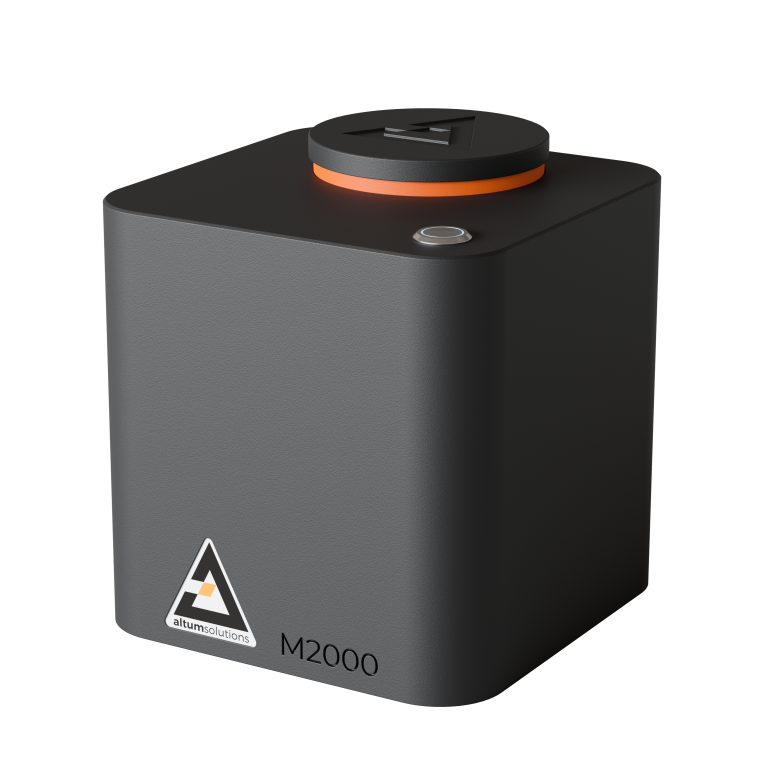
See what the M2000 does with your material — before any commitment.